Donald Trump: The Epstein Files Shows His Favorite Trick
There’s a familiar rhythm to every scandal that touches Donald Trump. A story breaks, the facts spill out, and before anyone can take a breath, he’s already shouting: Hoax. Witch hunt. Scam. Conspiracy.
TRUMPMEDIAPOLITICSCRIME
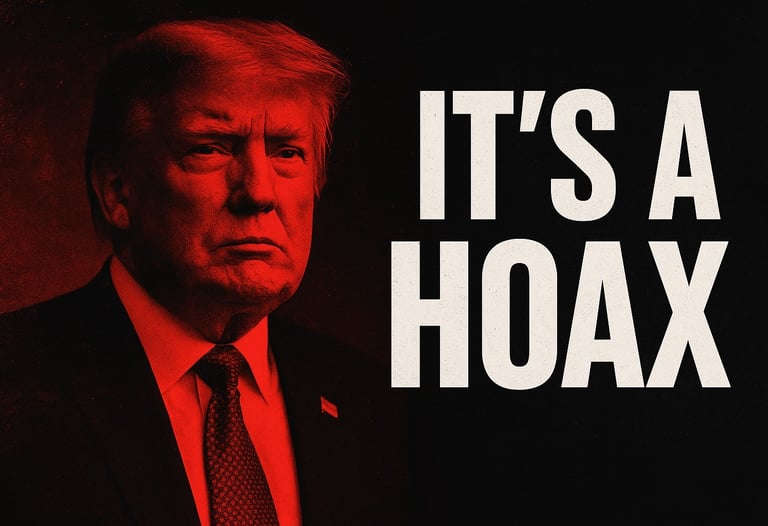
It’s a Hoax… Until He Needs It Not to Be
There’s a familiar rhythm to every scandal that touches Donald Trump.
A story breaks, the facts spill out, and before anyone can take a breath, he’s already shouting: Hoax. Witch hunt. Scam. Conspiracy.
It’s predictable.
It’s exhausting.
And usually, it’s the end of his argument.
But the Epstein files are different.
This time, Trump is trying to slice the scandal in half — dismissing the parts that involve him, while elevating the parts that implicate his enemies. In his telling, the Epstein documents are simultaneously worthless political propaganda andutterly trustworthy evidence, depending entirely on whose name appears in the paragraph you’re reading.
It’s the political version of trying to be inside the building and outside it at the same time.
And somehow, he expects the country not to notice.
Trump Doesn’t Just Pop Up in the Files — He Shows Up Again and Again
Let’s start with the simplest truth: Trump doesn’t appear in the Epstein emails once or twice. His name surfaces hundreds of times — reportedly over a thousand mentions across the threads. That’s not the footprint of a casual acquaintance. That’s presence. That’s familiarity. That’s a recurring character in the story, not a walk-on cameo.
And the moment those emails became public, the spin moved at light speed.
Suddenly every mention, every conversation, every document was part of a grand Democratic plot to take him down. Suddenly the files — which are extensive, detailed, and written long before Trump entered politics — became fantasy. How convenient.
It’s not that the evidence changed.
It’s that the implications did.
Which is exactly why Trump is trying to discredit the entire collection while simultaneously treating chunks of it like newly unearthed gospel.
Pam Bondi’s Overnight U-Turn Isn’t Coincidence — It’s a Strategy
And then there’s Attorney General Pam Bondi.
For months, Bondi insisted there was nothing meaningful in the Epstein files. She mocked the idea of a “client list.” She claimed there was nothing to pursue, nothing to uncover, nothing worth the government’s time.
But once these emails dropped and Trump’s name appeared more times than anyone expected, Bondi’s tune changed with whiplash speed. Suddenly she appointed a special prosecutor. Suddenly the documents mattered. Suddenly the investigation was necessary.
What changed?
Not the evidence.
Not the files.
Not the facts.
What changed was their usefulness — not to justice, but to Trump.
Bondi’s reversal isn’t rooted in new information. It’s rooted in political loyalty. If the files can be weaponized against Trump’s perceived enemies, then they’re worth investigating. If they threaten to splash back on him, then they’re a hoax.
It’s not law enforcement.
It’s targeted obedience.
Trump Isn’t Hiding the Contradiction — He’s Banking on You Accepting It
Here’s the part that would almost be admirable if it weren’t so corrosive: Trump isn’t even trying to make his contradiction sound coherent.
He doesn’t need to reconcile it.
He doesn’t need to explain it.
He doesn’t need it to make sense.
His political approach has always relied on one thing: chaos is more valuable than clarity.
If he keeps the public confused, overwhelmed, or at each other’s throats, the contradiction becomes background noise.
And truthfully?
It’s worked for him before.
He used it during the tax scandals.
During COVID.
During both impeachments.
During the classified documents fiasco.
During every legal crisis he’s ever faced.
Why wouldn’t he believe it will work now?
In Trump’s world, consistency is optional.
Loyalty is mandatory.
But This Time, the Paper Trail Is Too Long to Ignore
Here’s what makes this different: Trump is up against documents that don’t distort themselves to fit his narrative.
These aren’t anonymous leaks.
They’re not rumors.
They’re not partisan interpretations.
They are emails.
Thousands of them.
Written at the time.
Written by the people involved.
Written without any thought of future political fallout.
They are the closest thing we get to an unfiltered record — a snapshot of a world Trump desperately wants to pretend he barely stepped inside, even though the files suggest otherwise.
No matter how loudly he yells “hoax,” the documents stay the same.
They don’t care about his press releases.
They don’t bend to his ego.
They don’t rearrange themselves to protect him.
And that’s the real problem for Trump.
The Real Story Isn’t Trump’s Words — It’s His Fear of What Comes Next
What we’re seeing now — the frantic spin, the sudden investigations, the midnight narrative changes — is not confidence. It’s concern.
It’s not strength. It’s self-preservation.
It’s not leadership. It’s fear.
Fear that people will read the emails for themselves.
Fear that the volume of his name in the documents will shatter the carefully curated “just a guy who knew a guy” storyline.
Fear that the narrative is slipping beyond his control.
Trump wants the Epstein files to operate on two tracks:
Fake when they involve him.
Very real when they involve anybody else.
That isn’t just a contradiction.
It’s a confession.
It tells us exactly how nervous he is.
It tells us exactly how much he sees at stake.
And it tells us exactly why he’s trying to pull off his most ambitious spin-job yet — one that asks the public to believe a story is simultaneously true and false depending on which name shows up in the margins.
But this time?
The documents aren’t on his side.
And deep down, I think he knows it.
AI Generated Image
itsmyview.com © 2023-2025 All Rights Reserved
It's My View empowers people with the knowledge and tools to participate in meaningful political discourse and contribute to positive change.
Reframe your inbox
Subscribe to my blog and never miss a story.
We care about your data in our privacy policy.