Prices Didn’t Come Down, They Locked In and Kept Climbing
Campaign promises are powerful. But household budgets are more powerful. And right now, those budgets are telling a story about prices that campaign rhetoric cannot erase.
ECONOMICSPOLITICSTRUMP
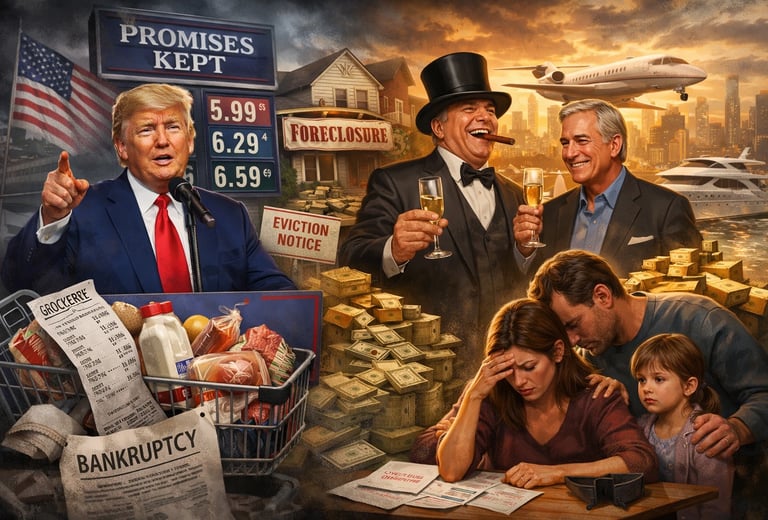
Inflation did fall from its 2022 peak before Trump returned to office. That cooling trend was already underway as supply chains normalized and Federal Reserve rate hikes slowed demand. By the time Trump was sworn in, inflation was far lower than its crisis highs.
But here’s the part that gets lost in the slogans:
Lower inflation does not mean lower prices.
It means prices are rising more slowly.
Groceries today are still dramatically more expensive than they were before the pandemic — roughly 25–30 percent higher than 2019 levels. Rent remains elevated nationwide after years of steep increases. Healthcare premiums continue their steady upward march. Insurance costs, utilities, property taxes — all of it remains higher than it was just a few years ago.
If the promise was that life would become more affordable, the evidence in household budgets says otherwise.
Your grocery receipt doesn’t care about political speeches. Your rent check doesn’t respond to campaign rallies.
The Affordability Squeeze Is Still Real
Housing remains the single largest expense for most Americans. Even where rent growth has slowed, the absolute cost is still far above pre-pandemic levels. Many families are spending a higher percentage of their income on shelter than at any time in recent decades.
Food costs remain elevated across staples. Dining out is significantly more expensive than it was four years ago. Healthcare costs — particularly insurance premiums and out-of-pocket expenses — continue to climb faster than wages for many workers.
Meanwhile, personal bankruptcies have been rising after historic lows during the pandemic relief period. Credit card balances have climbed. Delinquency rates are ticking upward.
These are not signs of broad-based financial relief.
They are signs of pressure.
Who Is Doing Better?
While many households tread water, the wealthiest Americans have seen extraordinary gains.
Stock markets have performed strongly. Corporate profits remain high. Executive compensation continues to break records. Billionaire wealth has surged, driven largely by asset appreciation — equities, real estate, private holdings — all of which disproportionately benefit the ultra-wealthy.
This is not unusual in modern America. Asset inflation tends to enrich those who already own significant assets. But it becomes politically significant when it coincides with promises to ease the burden on working families.
The result is a widening gap:
Working families face higher fixed costs.
Wealth holders see portfolio gains.
Corporate profits remain robust.
Everyday affordability remains strained.
That divergence fuels frustration because it feels unequal — and in many cases, it is.
The Messaging vs. The Math
Trump continues to claim that prices are down and affordability has improved. But the data tells a more complicated story.
Inflation is lower than its peak. That’s true.
Prices are not meaningfully lower. That’s also true.
Wages have risen in some sectors, particularly lower-wage jobs, but many middle-income households still report that costs are outpacing pay increases. And when essentials like housing and healthcare consume a larger share of income, small wage gains don’t feel like progress.
The political narrative says relief has arrived.
The lived experience for many Americans says otherwise.
The Bigger Question
The deeper issue isn’t just whether Trump “fixed” inflation. It’s whether the economic structure itself meaningfully changed.
Did housing become more affordable?
Did healthcare costs fall?
Did groceries return to pre-pandemic levels?
Did wealth inequality narrow?
The answer to each of those questions appears to be no.
And that’s why the affordability conversation isn’t going away.
Because when billionaires are setting wealth records while working families are juggling rent, food, and credit card payments, the gap becomes visible. And when political leaders claim victory while households still feel squeezed, the disconnect becomes political.
Campaign promises are powerful.
But household budgets are more powerful.
And right now, those budgets are telling a story about prices that campaign rhetoric cannot erase.
AI Generated Image
itsmyview.com © 2023-2025 All Rights Reserved
It's My View empowers people with the knowledge and tools to participate in meaningful political discourse and contribute to positive change.
Reframe your inbox
Subscribe to my blog and never miss a story.
We care about your data in our privacy policy.