The Cereal Aisle Test
A peaceful protester with a gun terrifies them. A man open-carrying in the cereal aisle feels normal. That single contrast tells you everything you need to know about how gun politics actually work in America. This was never about safety. It was never about responsibility.
RIGHTSFREE SPEECHREPUBLICANSPOLITICS
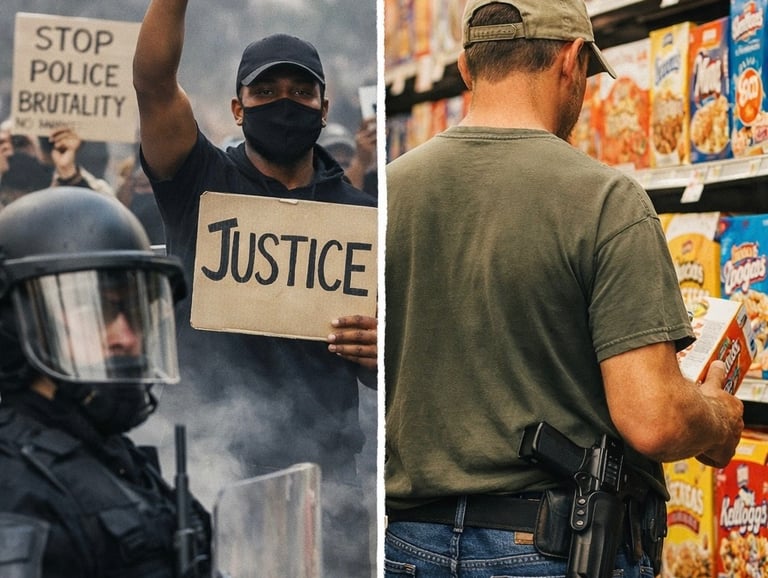
A peaceful protester with a gun terrifies them. A man open-carrying in the cereal aisle feels normal.
That single contrast tells you everything you need to know about how gun politics actually work in America.
This was never about safety. It was never about responsibility. And it was sure as hell never about principle.
It has always been about who is allowed to feel powerful—and who is not.
Guns Aren’t the Issue, Context Is
We are constantly told that guns are neutral tools. That the Second Amendment applies equally to everyone. That a gun is just a gun, and rights don’t change based on circumstance.
That story collapses instantly under the lightest scrutiny.
A peaceful protester—standing in public, exercising First Amendment rights—legally carrying a firearm is framed as dangerous, provocative, threatening. News chyrons light up. Police mobilize. Commentators clutch pearls and demand to know why anyone would bring a gun to a protest.
Meanwhile, a man wandering through a supermarket with a handgun on his hip is treated as background scenery. A quirky local flavor. A harmless eccentric. No outrage. No emergency response. No breathless panels asking why groceries require lethal force.
Same gun. Same legality.
Different politics.
The Unspoken Rule
The rule is simple, even if no one wants to say it out loud:
Guns are acceptable when they reinforce the existing power structure. They are unacceptable when they challenge it.
An armed protester represents dissent plus autonomy. That combination terrifies people who are deeply comfortable with authority flowing in only one direction.
An armed shopper, on the other hand, is compliant. Passive. Consuming. He isn’t questioning anything. He isn’t demanding change. He’s buying Frosted Flakes and going home.
That kind of armed citizen feels “safe.”
Not because he’s less dangerous—but because he’s less disruptive.
“Why Would a Peaceful Protester Need a Gun?”
This question gets asked with smug confidence, as if it’s profound.
The better question is: Why does anyone need a gun anywhere?
If the answer is personal safety, that logic doesn’t magically disappear when someone joins a protest.
If the answer is deterrence, that logic doesn’t evaporate because someone holds a sign instead of a shopping list.
If the answer is constitutional principle, then it either applies consistently—or it’s a lie.
What people really mean when they ask that question is:
“Why would those people want to be armed there?”
And that’s not about safety. That’s about control.
Rights vs. Permission
What we are watching in real time is the quiet shift from rights to permissions.
You are allowed to bear arms as long as you do it in ways that make the powerful comfortable.
Carry a gun while buying groceries? Fine.
Carry a gun while demanding accountability? Suddenly you’re suspicious.
Suddenly the same voices screaming about freedom start inventing conditions, caveats, and exceptions.
That’s not a constitutional republic.
That’s a vibe-based permission system.
The Tell
If guns were truly the problem, the cereal aisle would be a crisis zone.
If safety were truly the concern, open carry in crowded public spaces would spark universal outrage.
But it doesn’t.
Because the outrage was never about the gun.
It was about the protest.
It was about dissent.
It was about who gets to visibly wield power in public—and who is expected to stay quiet, compliant, and unarmed.
So remember the test:
A peaceful protester with a gun terrifies them. A man open-carrying in the cereal aisle feels normal.
Once you see it, you can’t unsee it.
AI Generated Image
itsmyview.com © 2023-2025 All Rights Reserved
It's My View empowers people with the knowledge and tools to participate in meaningful political discourse and contribute to positive change.
Reframe your inbox
Subscribe to my blog and never miss a story.
We care about your data in our privacy policy.